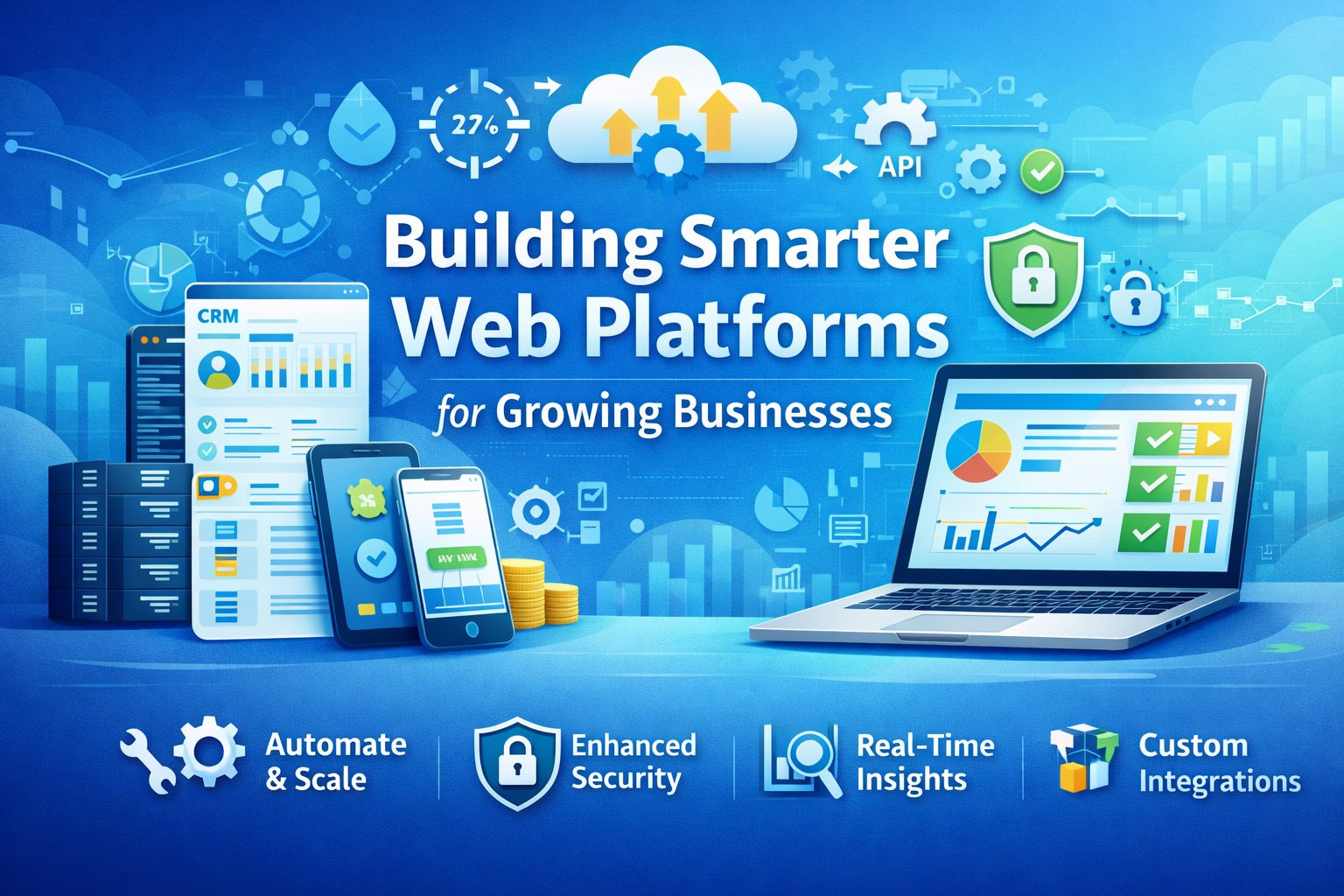
Everything You Need in a Modern Web Platform
Published on 08 Jan, 2026
In today’s digital-first world, a basic website is no longer enough. Businesses require modern web platforms that are powerful, scalable, secure, and built to support long-term growth. A well-designed web platform becomes the backbone of operations, customer engagement, and decision-making.
So, what exactly does a modern web platform need? Let’s explore.
1. Scalable Architecture
A modern web platform must be built to grow with your business. Whether you’re handling more users, transactions, or data, scalability ensures performance remains smooth without frequent rebuilds.
Why it matters:
Growing businesses cannot afford downtime or slow systems.
2. Automation & Smart Workflows
Automation is at the core of modern platforms. From billing and notifications to reporting and approvals, automated workflows save time and reduce errors.
Key benefits:
Less manual work
Faster operations
Improved productivity
3. Secure Data & Privacy Protection
Security is non-negotiable. A modern web platform must include strong data protection, secure authentication, and role-based access control.
Essential security features include:
Encrypted data storage
Secure login & authentication
Protection against cyber threats
4. User-Friendly Interface (UI/UX)
A clean, intuitive interface improves both user satisfaction and efficiency. Modern platforms focus on simple navigation, responsive design, and fast load times.
Good UI leads to:
Better user experience
Higher engagement
Reduced support requests
5. Real-Time Analytics & Insights
Data-driven decisions are critical for business success. Modern web platforms provide dashboards, reports, and analytics in real time.
Use analytics to:
Track performance
Monitor user behavior
Improve business strategy
6. Custom Integrations & APIs
Every business uses multiple tools—payment gateways, CRMs, email services, and third-party APIs. A modern web platform should integrate seamlessly with these systems.
Result:
One centralized platform instead of multiple disconnected tools.
7. Cloud-Based Accessibility
Cloud-based platforms allow users to access systems anytime, anywhere, from any device. This flexibility is essential for remote teams and modern work environments.
8. Customization & Flexibility
No two businesses are the same. A modern web platform must allow customization of features, workflows, and design to match specific business needs.
9. Performance & Speed Optimization
Fast-loading platforms improve user experience and SEO rankings. Performance optimization ensures your platform remains reliable even during high traffic.
10. Future-Ready Technology
Modern web platforms are built using future-ready technologies like cloud infrastructure, modular systems, and AI-driven automation—ensuring long-term sustainability.
Why Modern Web Platforms Matter for Business Growth
A modern web platform is more than software—it’s a growth engine. It improves efficiency, enhances customer experience, supports scalability, and keeps businesses competitive in a rapidly evolving digital market.
Conclusion
Everything you need in a modern web platform comes down to scalability, automation, security, performance, and flexibility. Businesses that invest in smart, modern platforms are better prepared for growth, innovation, and long-term success.
If your business is planning for the future, building or upgrading to a modern web platform is the smartest decision you can make.